
Move That Body

INTERVIEW ON THE PRICE OF BUSINESS SHOW, MEDIA PARTNER OF THIS SITE.
Recently Kevin Price, Host of the nationally syndicated Price of Business Show, welcomed Dr. Ann Hester to provide another commentary in a series.
The Dr. Ann Hester Commentaries
Let’s start with some reassuring news.
Your body is not broken, and you are not “too old.”
You didn’t suddenly lose your discipline or your motivation.
What’s happening is far less dramatic—and far more fixable.
You’re sitting. A lot. Your body doesn’t like that. As a matter of fact, it loathes excessive downtime.
Modern life has turned sitting into a full-time activity. We sit to work, sit to commute, sit to relax, sit to scroll, and then sit some more because we’re tired from all that sitting. And let’s not even talk about those weekend movie binges. Movement, once woven naturally into daily life, has been pushed to the margins—something we try to “fit in” if there’s time left over.
That shift hasn’t been kind to our bodies.
We Were Built to Move, Not to Perform
Humans weren’t designed for chairs, screens, and hours of stillness. We were designed for regular, everyday motion—walking, reaching, lifting, bending, standing, and resting in between.
Movement was never meant to be a performance or a punishment.
Yet many people avoid it because they believe it has to look a certain way. It has to be intense. It has to be long. It has to be sweaty. And if it can’t be done perfectly, it doesn’t seem worth doing at all.
That belief keeps far too many people stuck.
Ordinary Movement Is Underrated
Here’s a truth that doesn’t get nearly enough attention: small, ordinary movement—done consistently—has a powerful effect on how we feel.
A walk around the block.
Standing up between tasks.
Stretching while dinner is cooking.
Ten minutes of movement after a meal.
These aren’t “nothing.” They’re reminders to the body that it’s still needed and still capable. And when the body gets that reminder, it tends to respond quickly—with better energy, looser joints, and a clearer head.
Consistency beats intensity every time.
Why Sitting Feels Comfortable—but Costs You
Sitting feels restful, especially when life is busy. But long stretches of stillness quietly take a toll. The body stiffens. Energy dips. Simple movement starts to feel harder than it should.
The less we move, the less we want to move. And the less we want to move, the more tired we feel. It’s a cycle many people blame on aging, when it’s often just inactivity piling up.
The good news is that this cycle doesn’t take months or years to reverse. Often, it only takes a few days of gentle, regular movement to feel a shift.
Movement Is About Freedom, Not Fitness
Movement isn’t about looking younger or chasing a number on a scale.
It’s about freedom.
The freedom to travel comfortably.
The freedom to keep up with daily life.
The freedom to move without constant stiffness or hesitation.
It’s about staying capable, confident, and connected to your body as the years pass.
And that matters at every stage of life.
A Simple Way to Begin
If you’re not sure where to start, keep it simple:
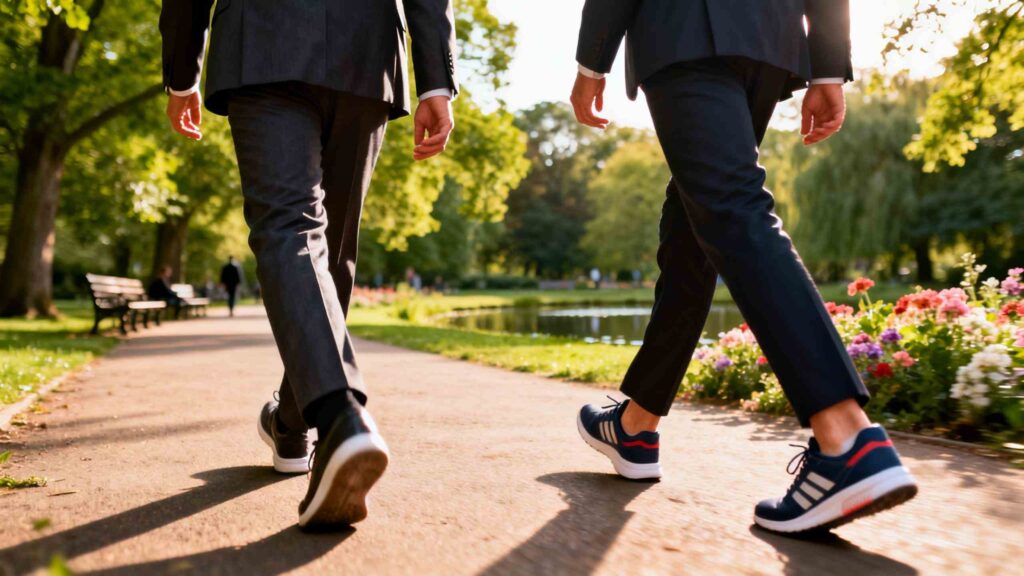
After one meal each day, take a 10-minute walk.
No special clothes. No apps. No pressure to do more.
Just ten minutes to remind your body what it was built to do.
Try it for a week. Pay attention to how you feel. Because movement doesn’t demand perfection or enthusiasm—it just asks you to begin.
Sometimes the most meaningful change starts with standing up, stepping outside, and taking the long way home.
Ann M. Hester, M.D. is a board-certified internist with over 25 years of experience. She obtained her medical degree from the University of Tennessee in Memphis. Dr. Hester believes when patients are taught exceptional “patient skills,” they become empowered to play a previously unimagined role in optimizing their medical care and minimizing medical costs. Her mission is to share these critical skills by various means, thereby improving patient outcomes and strengthening the U.S. healthcare system. This mission started in medical school when she witnessed the tremendous gap between how patients and doctors think. Over the years, she has written various patient empowerment pieces online and through books. Her latest book is Patient Empowerment 101: More than a book, it’s an adventure! This unique work takes an unprecedented step in helping people think more like doctors and position themselves at the center of their healthcare team.
Learn more at https://www.patientempowerment101.com.
Connect with her through social media:
Twitter: @patientworldnet
LinkedIn: https://www.linkedin.com/in/patientempowerment101 https://www.linkedin.com/in/annhester/
For more great health and lifestyle content, see here.
Explore more insights at https://usadailystandard.com/.

 A Real Shift in Nutrition Policy — And Why It Gives Me Hope
  The Fuel Fix: Rethinking Type 2 Diabetes With Dr. John Poothullil
  The Calm Frequency: Where Healing Meets Abundance
  There Is No Glory in Fostering, but There Is Joy
  Why Personalized Luxury Travel Makes Every Journey Truly Unforgettable
  Because Some Won’t Make It Home Safe
  Extending Enterprise Search to International Languages, Numeric Expressions and Even Emojis
  What Mistakes or Pitfalls Could I Have Helped Myself Avoid?
  SaaS and Technology Agreement Attorneys in New York City