
A Real Shift in Nutrition Policy — And Why It Gives Me Hope


While I don’t see eye-to-eye with this administration on many issues, we share important common ground on nutrition and chronic disease. On this topic, I’m encouraged by the direction they’re taking.
When the new U.S. Dietary Guidelines for Americans were released on January 7, 2026, I felt something I rarely feel when reading government policy: genuine excitement. Something meaningful has shifted in American nutrition thinking—and it closely aligns with what I’ve spent years teaching about metabolism, chronic disease, and especially Type 2 diabetes.
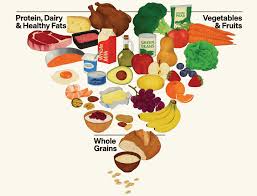
For the first time in decades, federal nutrition guidance has moved away from heavily promoting grains and refined carbohydrates and has put real food—whole proteins, healthy fats, fruits, and vegetables—back at the center of health. That is not a small adjustment. It’s a major course correction.
What the New Guidelines Say — and Why It Matters
The updated recommendations from the U.S. Departments of Health and Human Services and Agriculture are more than another “eat this, not that” list. They reflect a fundamental change in how the government thinks about food and disease.
The message is simple:
- Eat less refined carbohydrates and added sugars.
- Avoid ultra-processed foods.
- Focus on nutrient-dense whole foods—proteins, healthy fats, fruits, and vegetables.
- Limit highly processed products that dominate the modern food supply.
These guidelines aren’t framed as a strict low-carb diet, but they clearly state that refined carbohydrates and added sugars are major contributors to chronic diseases like obesity and Type 2 diabetes. Instead of filling plates with empty calories, they encourage replacing them with whole foods, quality proteins, and healthy fats.
That is exactly the message I’ve been sharing with patients and readers for years.

Why This Matches What I See in Practice
In my clinical work, I’ve seen the same pattern again and again: Type 2 diabetes and metabolic dysfunction are driven by what I call “fuel overflow”—the body’s chronic exposure to more easily digestible carbohydrates than it can handle.
The new dietary guidance finally reflects what many clinicians have known for years:
- Ultra-processed foods are harmful.
- Added sugars and refined carbs drive chronic disease.
- Diet must be built around real, nutrient-rich foods that support metabolic health.
This isn’t a trend—it’s a recognition, at the highest level of public health policy, that food quality determines whether we move toward health or disease.
Common Ground Without Total Agreement
To be clear, I don’t suddenly agree with this administration—or with RFK Jr.—on everything. I still have serious differences of opinion on many public health issues, and I don’t believe this policy alone fixes our broken food system. We still live in a world dominated by cheap processed foods, aggressive marketing, and industries that profit more from sickness than from health.
But good healthcare—and good policy—isn’t about ideology. It’s about what actually helps people live longer, healthier lives. On this issue, the new guidance does something earlier federal nutrition policy never did well: it forces us to rethink carbohydrates, sugar, processing, and metabolic health.
That matters.
Doctors Are Finally Getting the Signal
One of the most encouraging parts of this shift is what it means for medicine.
For decades, medical education has barely touched nutrition. Doctors graduate well-trained in diagnosis and medication, but with surprisingly little understanding of how food affects metabolism, hormones, inflammation, and disease.
That is finally starting to change.
By clearly linking refined carbohydrates and ultra-processed foods to chronic disease—and by emphasizing whole foods and balanced macronutrients—these guidelines give physicians something practical to use in daily practice. Instead of turning to medication first, more doctors will have a strong, evidence-based framework to help patients heal through diet.
That is a true paradigm shift.

What This Means for Everyday People
So what does this mean for the average person?
- It means choosing foods that nourish your cells, not spike your blood sugar.
- It means favoring whole, unprocessed meals over packaged, engineered products.
- It means seeing carbohydrates not as “free fuel,” but as something to choose carefully—especially if you are pre-diabetic.
This isn’t about eating anything you want. It’s about eating what your body actually needs to stay healthy.
And it’s long past time that national dietary guidance caught up with what science—and real-world patient experience—has been showing for years.
A Moment Worth Recognizing
I don’t suddenly agree with this administration or with RFK Jr. on every issue. Public health policy should always be questioned and grounded firmly in science.
But on this issue—real food, fewer refined carbs, and chronic disease prevention—I see something worth celebrating.
When federal guidance finally begins to match what clinicians see every day—when policy meets physiology—real change becomes possible.
And for the millions of Americans living with prediabetes or Type 2 diabetes, that change cannot come soon enough.
We finally have a national nutrition conversation that puts health before ideology, science before slogans, and real food before marketing.
That is a step forward—and I’m glad to see it.
John Poothullil practiced medicine as a pediatrician and allergist for more than 30 years, with 27 of those years in the state of Texas. He received his medical degree from the University of Kerala, India in 1968, after which he did two years of medical residency in Washington, DC and Phoenix, AZ and two years of fellowship, one in Milwaukee, Wisconsin and the other in Ontario, Canada. He began his practice in 1974 and retired in 2008. He holds certifications from the American Board of Pediatrics, The American Board of Allergy & Immunology, and the Canadian Board of Pediatrics.During his medical practice, John became interested in understanding the causes of and interconnections between hunger, satiation, and weight gain. His interest turned into a passion and a multi-decade personal study and research project that led him to read many medical journal articles, medical textbooks, and other scholarly works in biology, biochemistry, physiology, endocrinology, and cellular metabolic functions. This eventually guided Dr. Poothullil to investigate the theory of insulin resistance as it relates to diabetes. Recognizing that this theory was illogical, he spent a few years rethinking the biology behind high blood sugar and finally developed the fatty acid burn switch as the real cause of diabetes.Dr. Poothullil has written articles on hunger and satiation, weight loss, diabetes, and the senses of taste and smell. His articles have been published in medical journals such as Physiology and Behavior, Neuroscience and Biobehavioral Reviews, Journal of Women’s Health, Journal of Applied Research, Nutrition, and Nutritional Neuroscience. His work has been quoted in Woman’s Day, Fitness, Red Book and Woman’s World.Dr. Poothullil resides in Portland, OR and is available for phone and live interviews.To learn more buy the books at: amazon.com/author/drjohnpoothullil
Visit drjohnonhealth.com to learn more. You can also contact him at john@drhohnonhealth.com.
Or follow us on:
Instagram: instagram.com/DrJohnOnHealth
Facebook: facebook.com/JohnOnHealth
Youtube : @DrJohnPoothullil
For more great health and lifestyle content, see here.
Explore more insights at https://usadailystandard.com/.

 Move That Body
  The Fuel Fix: Rethinking Type 2 Diabetes With Dr. John Poothullil
  The Calm Frequency: Where Healing Meets Abundance
  There Is No Glory in Fostering, but There Is Joy
  Why Personalized Luxury Travel Makes Every Journey Truly Unforgettable
  Because Some Won’t Make It Home Safe
  What Mistakes or Pitfalls Could I Have Helped Myself Avoid?
  SaaS and Technology Agreement Attorneys in New York City
  A Real Shift in Nutrition Policy — And Why It Gives Me Hope